
Feather Ruffling
Another controversial subject.
I’m taking a strong, educated and experienced stand, and this WILL ruffle feathers. So sit down and get a blanket. You might need it! (If you know me, I am blunt, and I will always tell a stranger to me if I’m intending to be joking)
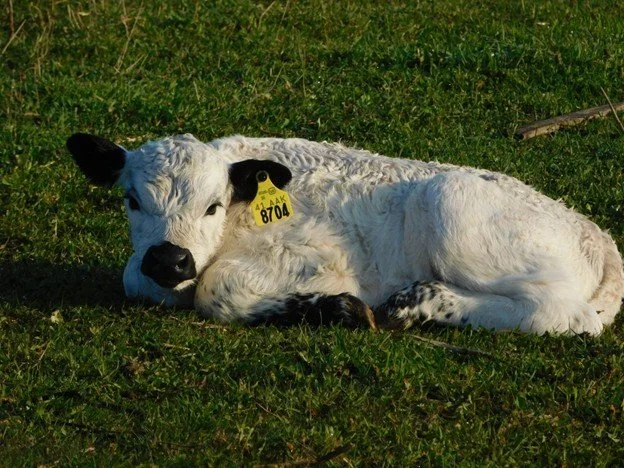
Ok, let’s talk about baby calves, and bottle calves.
LOGIC:
1. Why is the calf a bottle calf?
A. Cow died calving?
B. Why was cow sick or why did she die or require calf removed?
C. No milk?
D. Mean/ stupid mother?
E. Environmental factor: calving in months not labeled “mid to late spring”?
F. Found dumped at a stock yard, sale barn, or feedlot?
G. Multiple birth?
H. Mineral deficiency or nutritionally starved? I. Other __________
2. Commitment to a life.
A. Is grafting onto a cow without a calf to make a family?
B. Fill an emotional need to nurture something?(believe me, this happens)
C. Bucket calf “competition” for kids?
D. Dairy where hand rearing calves is thought to be “normal”
E. other ________________
3. There’s only one true way to sensibly and logically deal with a bottle calf.
That is to start with the intention that this animal will never ever reach its true genetic potential if it doesn’t get a mother COW. And that’s a long shot too.
4. Being responsible to the gene pool. Commit that bottle animal to the freezer camp.
5. Because bottle calves do not know humans are alpha, a lesson only a cow can teach, it is strongly recommended to never ever keep one as a breeding bull/animal if at all humanly possible.
And not too wise to raise as a breeding cow. Those reasons it was orphaned in the first place from #1 above, that’s a big part of it!
I will grant, natural disasters happen, storms, tornado, fire, but what long term effects did those cause?
There’s millions of cows in the country. Get a good one!
6. Real cost of a sick calf.
Vet supplies: permeant irreversible damage to gut lining (animal will never be able to fully absorb nutrients from the gut - story below)
7. A calf/cow for a pet.
Hate to break it to ya but if cattle were pets, you would have to wait until they are 12 weeks old before it could be adopted, you’d be paying $2000-3000 since pets sell for around $20-100/ lb. Then the food, vet, transport, shelter, space to roam all calculated you better have a 6 figure job to think about that.
Cattle aren’t pets, they don’t make good pets. In all reality, they are walking food, and everyone knows no one will pay more than a couple dollars a pound for food! (Ok, rant over)
Dollars to donuts.
To do a bottle calf 60 days on milk takes 2 bags of milk replacer. Good milk replacer is about $75/ bag. Right now.
In my example hypothetical calf:
So you bought a beef calf for $250
$150 in milk.
$45 in calf starter feed
$50 vet expense
$5/day Time (30 minutes average daily)
(If you have 10 Calves what are the odds of loosing 1?)
Trucking to get calf, etc.
At 6 months old, how big is the calf? What’s its market value? IF that calf was from a diseased cow, or picked up a disease and brought it to your sterile/clean land farm??? What’s cost will that have long term??
How much did you make or lose?
Ok. The story:
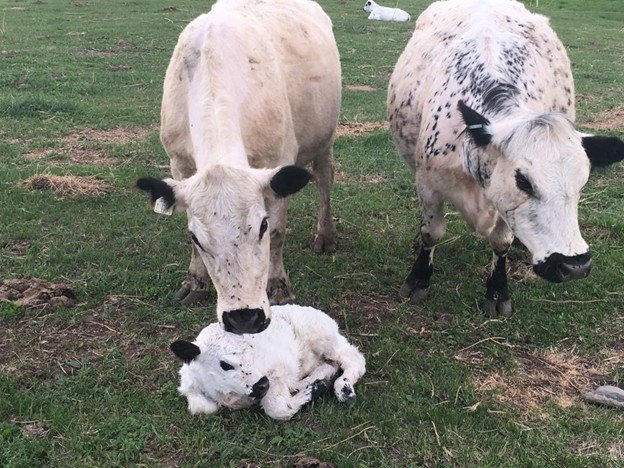
Back some years ago I had a calf on her mother get horribly sick with scours. We did everything short of shooting it to catch it. It was born one of the last years we calved during the spring thaw.
Finally after 4/5 days the calf was becoming weak, and we could finally get close enough to catch it. The mom was one of our best cows in her prime. Another of her daughters was to be a future champion cow. Not this daughter though. This one was doing absolutely incredible up until she got sick. We use activated charcoal to treat scours. I honestly don’t do much more. But we have level 2-4 above that if needed.
The calf was sleeping in the calf hut as we went to feed our cows. I saw the calf and signaled my kids it was there. We snuck in and pounced like a family of mountain lions! No joke! That stinker wasn’t going anywhere. The calf was down and dehydrated. Dehydration is what kills calves. So the calf got charcoal, and a healthy dose of level 3 treatment. Which is Sub Q fluids. This only buys the calf 12 hours if you give enough. That calf fought us the whole way. But we didn’t want to throw this calf away without trying. We let the charcoal settle and the fluids to buy some time.
The next morning we snuck out and caught her again. Gave more fluids and probiotics. The calf lost a lot of hair, from scour burns but it lived. It was half the size of the others at weaning. Now this calf should have gone straight in the cull pen, but I decided to give her a chance. Mostly because I wanted to do an educated experiment. (I do those all the time)
She grew up but never was half the female her mom and sisters were. Her half sisters made her look like a real joke. I kinda forgot about her story for a few years. Then after her 3rd crappy calf, while skipping a calf twice, (calving every other year) it dawned on me to look back. I remembered that calf. She was a sorry excuse of a cow.
Guess what. The meat was just ok. The next year the same cow had a full sister to that sickly case. It was stunningly beautiful, and to this day never made a mistake.
If anyone wants to debate the effects
Of scours on the gut, talk to a vet! Do necropsies. Look at dead calves gut lining. It should look like shag carpet, not a linoleum floor!
Cows don’t live on the grass they eat so much as what the bacteria in their gut makes of it. The gut needs that shag carpet lining to give bacteria more places to hang out, and survive. It helps churn the feed in the gut, it’s a living thing inside the animal. Once damaged, its permanent and irreversible.
People wonder why their project calf bloats. My first question is did it ever have scours as a calf? Because many are bought, they often can’t answer that. The type of scours, how often and how long they had it all makes a difference in how much damage is done. Some calves scour a little and no biggie. The next burns the hair off their tail and legs that’s a strong acid to do that! Think about it!
Colostrum is best into the calf by 2 hours old, but must be before 12 hours old. After that it’s nearly pointless. That info is readily known. Basic knowledge. The big point of colostrum is to chemically tell the calf to stop processing the blood nutrient transfer from its mother to using its gut to support itself. The antibodies in the colostrum help jump start the calf and get it going with the right ph, and bacteria to build a biome Of it’s own.
They will eat manure and other things to get microbes from their environment. Not all of them are friendly.
If the calf can be grafted to a cow, that’s best. In a dairy, high fat, low milk production cows can be trained as a nurse cow. They can handle about 1 calf per 10-15 lbs of milk they produce.
Make sure she’s disease free! She will also teach the calves what to eat, and how to be a cow!
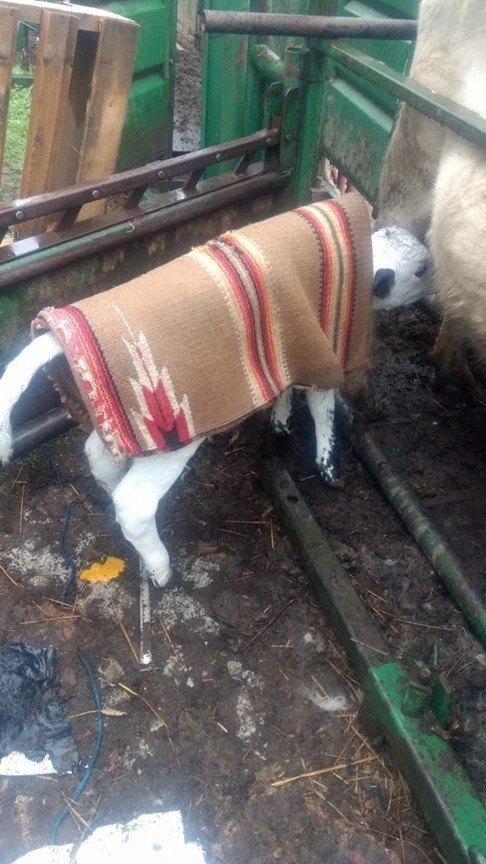
Calf with dunce mother.
4 sentence grafting:
No need to skin the calf that does when grafting. The cow identifies by smelling the calf butt! When the milk of the cow comes thru, it will smell like her, much higher odds of acceptance. When they pair, wait 1 day, kick them out to the herd. (graft cows like treats, ie. molasses)
In closing: orphan calves aren’t good animals to build a herd on. Last thing you want to do is build a herd of someone else’s problems. Spent 3-600 more and get a good quality calf that was raised naturally.
See other posts about how long a calf needs mother.
Wishing you success in all your ventures!